


Introduction
Tennis fans are always fascinated by power. Whether it’s a lightning‑quick rally or a devastating ace, speed changes matches. When people search for the Fastest Tennis Shot, they are usually referring to the fastest serve ever recorded — and that record belongs to Sam Groth, who delivered a staggering 263.4 km/h (163.4 mph) serve in 2012.That number remains one of the most talked‑about statistics in tennis history.
But what makes a serve that fast? Is it raw strength, perfect timing, biomechanics, or specialised equipment? And more importantly, how can everyday players increase their own serve speed safely and effectively?This guide explores the fastest serve record, compares elite players, explains the mechanics behind power, and provides practical training tips to help you serve faster.
The Official Record: Sam Groth’s 263.4 km/h Serve
The current benchmark for the fastest serve is 263.4 km/h by Australian player Sam Groth. While recorded at a Challenger-level tournament rather than a Grand Slam event, the serve is widely recognised as the fastest measured in professional play.Several players have come close, but none have surpassed it.
Top Recorded Serve Speeds
Player Speed (km/h) Year Sam Groth 263.4 2012 Albano Olivetti 257.5 2012 John Isner 253.0 2016 Ivo Karlović 251.02011 Milos Raonic 250.02 2012Although debates sometimes arise about conditions or tracking accuracy, Groth’s nerve remains the official reference point.
Why the Serve Is the Fastest Shot in Tennis
In tennis, the serve is unique because it’s the only shot where the player controls every variable before impact. There’s no incoming ball to react to and no defensive positioning required.
This control allows players to generate maximum power through the full kinetic chain. Unlike forehands and backhands, where timing depends on the opponent, the serve is self-initiated.
The body contributes in a coordinated sequence: legs push off the ground, hips rotate, the torso coils, the shoulder externally rotates, and the wrist snaps at contact. When executed efficiently, this chain produces explosive velocity.
The Biomechanics Behind High-Speed Serves
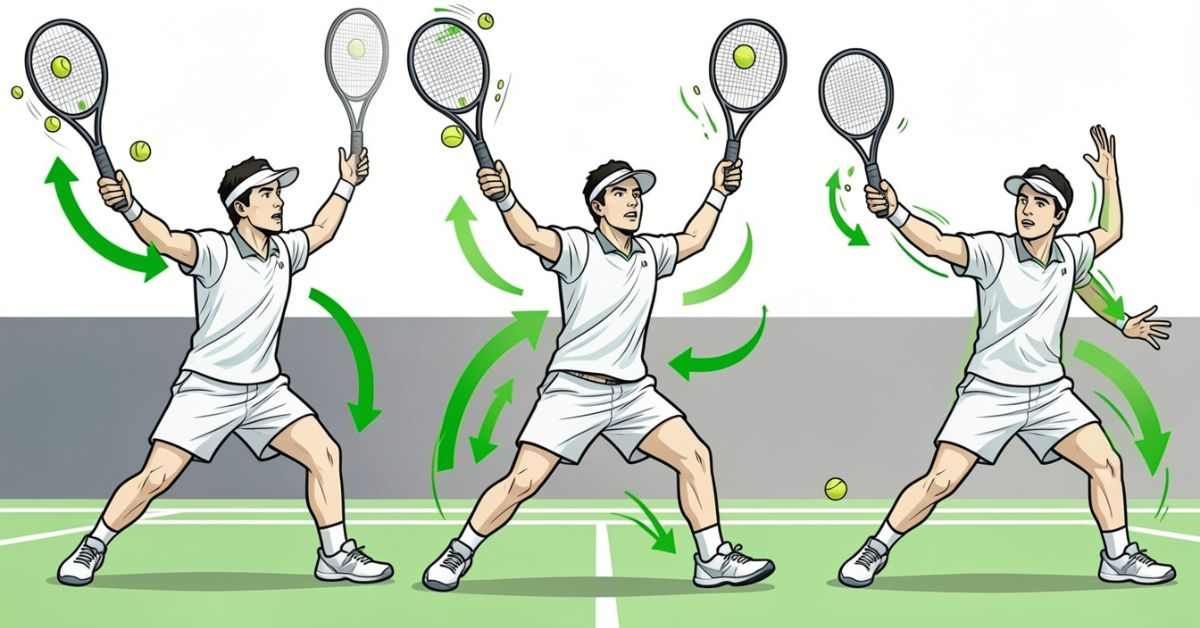
Speed is rarely about arm strength alone. Instead, it comes from fluid coordination and energy transfer.
The key biomechanical elements include:
- Deep knee bend for upward drive
- Full torso rotation
- High contact point above the head
- Relaxed arm acceleration followed by explosive pronation
Players who tense their arms too early often lose speed. Power comes from sequencing, not forcing the motion.Professional servers spend years refining this movement pattern, focusing on balance and rhythm.
Equipment and Its Role in Serve Velocity
Modern tennis equipment has influenced how players generate power.Racquet frames are lighter yet stiffer than in previous decades. String technology, particularly polyester strings, allows players to swing aggressively while maintaining control.
Era Racquet Type Typical Max Serve 1980s Wooden racquets 180–190 km/h 1990s Early graphite, 190–210 km/h, 2000s Advanced graphite, 210–240 km/h, 2010s+ High-tech composites: 220–260 km/hLower string tension can increase power, but control decreases slightly. The right balance depends on playing style.Still, equipment enhances potential — it doesn’t replace technique.
Professional Techniques to Increase Serve Speed
Improving serve speed requires deliberate practice and technical refinement.
Coaches emphasise several foundational principles:
- Use leg drive to generate upward force
- Keep the toss slightly in front of your body.
- Maintain shoulder flexibility
- Relax your grip before acceleration
- Focus on smooth rhythm rather than brute force
One of the most overlooked factors is timing. The serve must feel fluid rather than rushed.
Players who attempt to swing harder without correcting mechanics often plateau or risk injury.
Training Drills to Boost Serve Power
Consistent drills build muscle memory and explosiveness.
Medicine ball throws are effective for improving core rotation. Shadow serves to help reinforce motion sequencing without worrying about ball placement. Target practice ensures power remains accurate.
A simple weekly structure might include:
Day Focus Monday Technique refinement Wednesday Power development drills Friday Speed and accuracy balance
Rest days are important to protect the shoulder joint from overuse.
Strength and Conditioning for Faster Serves
Physical conditioning contributes significantly to serve velocity. The most important muscle groups include the legs, core, and rotator cuff.
Exercises that improve serve performance include rotational cable pulls, squat jumps, shoulder band work, and planks.Flexibility is equally important. Tight shoulders limit range of motion and reduce speed potential.Structured conditioning improves stability, power transfer, and injury prevention.
Common Mistakes That Slow Down Your Serve
Many players unintentionally limit their speed.
Common issues include:
- Tossing the ball too low
- Opening the shoulders too early
- Gripping the racquet too tightly
- Failing to use leg drive
- Over-swinging without proper rotation
Correcting these errors often increases speed immediately.Professional coaching or video analysis can reveal mechanical inefficiencies.
The Mental Side of Serving Big
Confidence influences performance. Serving at high speeds requires commitment. Hesitation reduces racket head acceleration.
Players must trust their mechanics and avoid fear of double faults. Practising under simulated match pressure builds mental resilience.Elite servers often visualise their serve trajectory before execution. This mental rehearsal improves consistency and timing.
Can the Record Be Broken?
Sports science continues to advance. Athletes are stronger, training methods are more refined, and equipment is more advanced.
However, there are limiting factors. Modern court surfaces are generally slower, emphasising longer rallies. Injury risk also increases with extreme serving speeds.While it is possible someone may exceed 263.4 km/h in the future, the benchmark remains extraordinary.
FAQs
What is the Fastest Tennis Shot serve ever recorded?
263.4 km/h by Sam Groth in 2012.
Is the serve always the fastest tennis shot?
Yes, because players generate full-body power without reacting.
Can amateur players increase serve speed significantly?
Yes, with consistent technique training and conditioning.
Does racquet choice matter?
It contributes, but technique is more important.
How long does it take to improve serve speed?
Most players see measurable improvement within a few months of structured practice.
Conclusion
The Fastest Tennis Shot record, set by Sam Groth at 263.4 km/h, remains a powerful symbol of athletic potential. But speed alone does not define success. Technique, coordination, conditioning, and mental focus all contribute to serving excellence.
Whether you are a recreational player or an aspiring competitor, improving serve speed is achievable through disciplined practice and smart training.